- 0
- 730 words
The real estate market has become one of the most intense financial battlegrounds in the modern economy where prices in many.
Regions continue to surge to record highs while concerns about affordability grow louder each year. For buyers, investors, and even first-time homeowners, the uncertainty is overwhelming: are we witnessing a powerful long-term boom driven by real demand and development, Luxenest Spaces or is the market quietly inflating into a bubble that could eventually burst and reshape the global housing landscape?
The Forces Driving Real Estate Prices Higher
One of the main reasons real estate prices continue to rise is population growth and urbanization. As more people move into cities in search of jobs and better opportunities, demand for housing increases faster than supply. This imbalance naturally pushes property prices upward, especially in major urban centers.
Another powerful factor is low housing supply in many regions. Construction has not kept pace with demand due to rising land costs, strict regulations, and limited available space in prime locations. When fewer homes are available, competition among buyers intensifies, driving prices even higher.
In addition, investment activity plays a major role. Real estate has long been seen as a safe asset for wealth preservation, attracting both local and foreign investors. This influx of investment capital can further inflate prices, especially in desirable markets where returns are expected to remain strong.
Signs That a Real Estate Bubble May Be Forming
Despite strong demand, some experts warn that certain markets may be overheating. When prices rise faster than incomes, it becomes increasingly difficult for ordinary buyers to afford homes. This gap between income growth and property prices is often considered a warning sign of a potential bubble.
Another red flag is excessive speculation. In some regions, properties are being purchased not for living purposes but purely for short-term profit. This speculative behavior can artificially inflate prices and create unstable market conditions that are not supported by real housing needs.
High levels of household debt also contribute to concerns. When buyers rely heavily on loans to purchase expensive properties, the market becomes more vulnerable to economic shocks. If interest rates rise or economic conditions worsen, many homeowners may struggle to meet their financial obligations.
Also Read: Home Design Secrets Revealed! Turn Any Space Into a Luxury Dream House
Why the Market Still Shows Strength
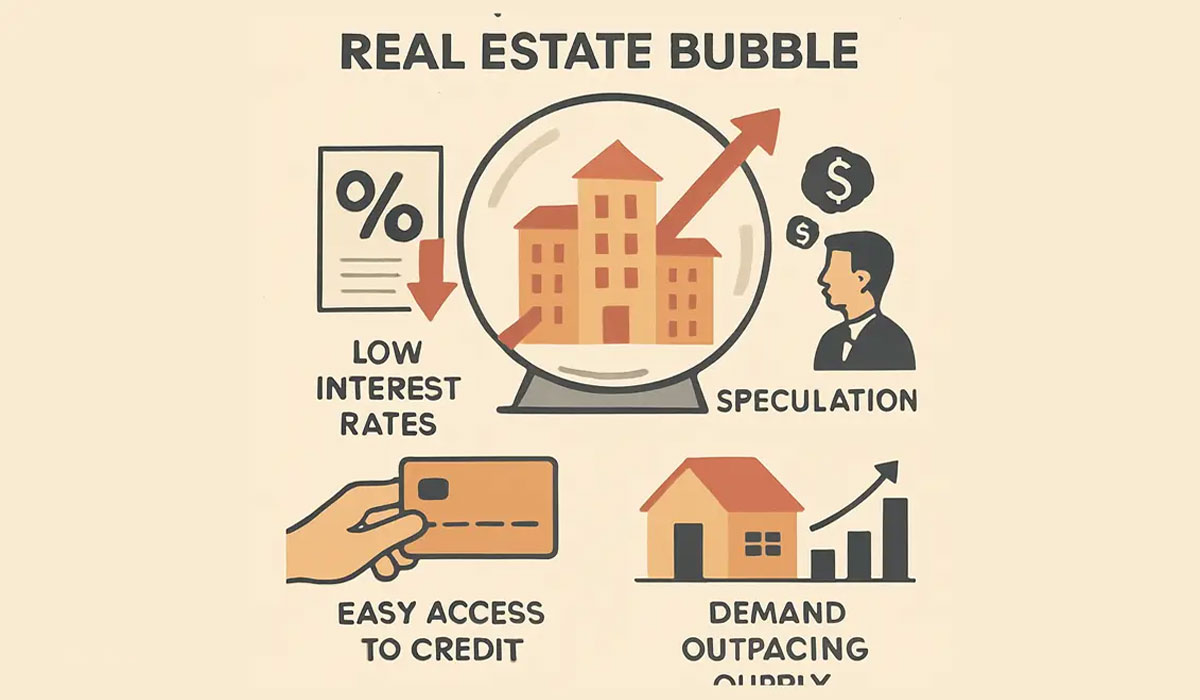
Even with concerns about overheating, many real estate markets continue to show strong fundamentals. One key reason is persistent housing demand driven by demographic trends. Younger generations are still entering the housing market, ensuring a steady flow of potential buyers.
Another factor supporting the market is infrastructure development. Governments and private companies continue to invest in transportation, commercial hubs, and urban expansion. These developments increase property value over time and support long-term growth in many regions.
Technological innovation has also changed the real estate landscape. Digital platforms make it easier for buyers and sellers to connect, improving market efficiency. At the same time, smart homes and modern construction methods are increasing the attractiveness of new properties, further supporting demand.
How Buyers Can Navigate the Uncertainty
For potential buyers, understanding market cycles is essential. Real estate naturally goes through periods of growth and correction, and timing plays a crucial role in making smart investment decisions. Buying without proper research can lead to financial stress if prices adjust downward.
Diversification is another important strategy. Instead of putting all financial resources into one property, many investors spread their investments across different asset types. This helps reduce risk and provides more stability during uncertain market conditions.
Finally, long-term thinking remains one of the safest approaches in real estate. While short-term price fluctuations can be unpredictable, property has historically increased in value over time. Buyers who focus on long-term goals rather than quick profits are often better positioned to handle market volatility.
Conclusion
The real estate market today exists in a complex balance between genuine growth and potential overheating. Strong demand, urbanization, and limited supply continue to push prices upward, while concerns about affordability, speculation, and rising debt suggest caution. Whether the market is in a boom or approaching a bubble depends largely on location and economic conditions. For buyers, the key is not to panic but to stay informed, understand risks, and make decisions based on long-term stability rather than short-term hype.
Image Source:
- First Image from fenixgolf.co.uk
- Second Image from topgolf.co.id
Author

Aeronwalkers@gmail.com
Related Posts
You Won’t Believe These Real Estate Deals That Are Making Millionaires Fast!
- 0
- 537 words
Discover unbelievable real estate deals creating millionaires fast! Learn how to spot opportunities and grow your wealth in 2026. Real estate is...
Read out all